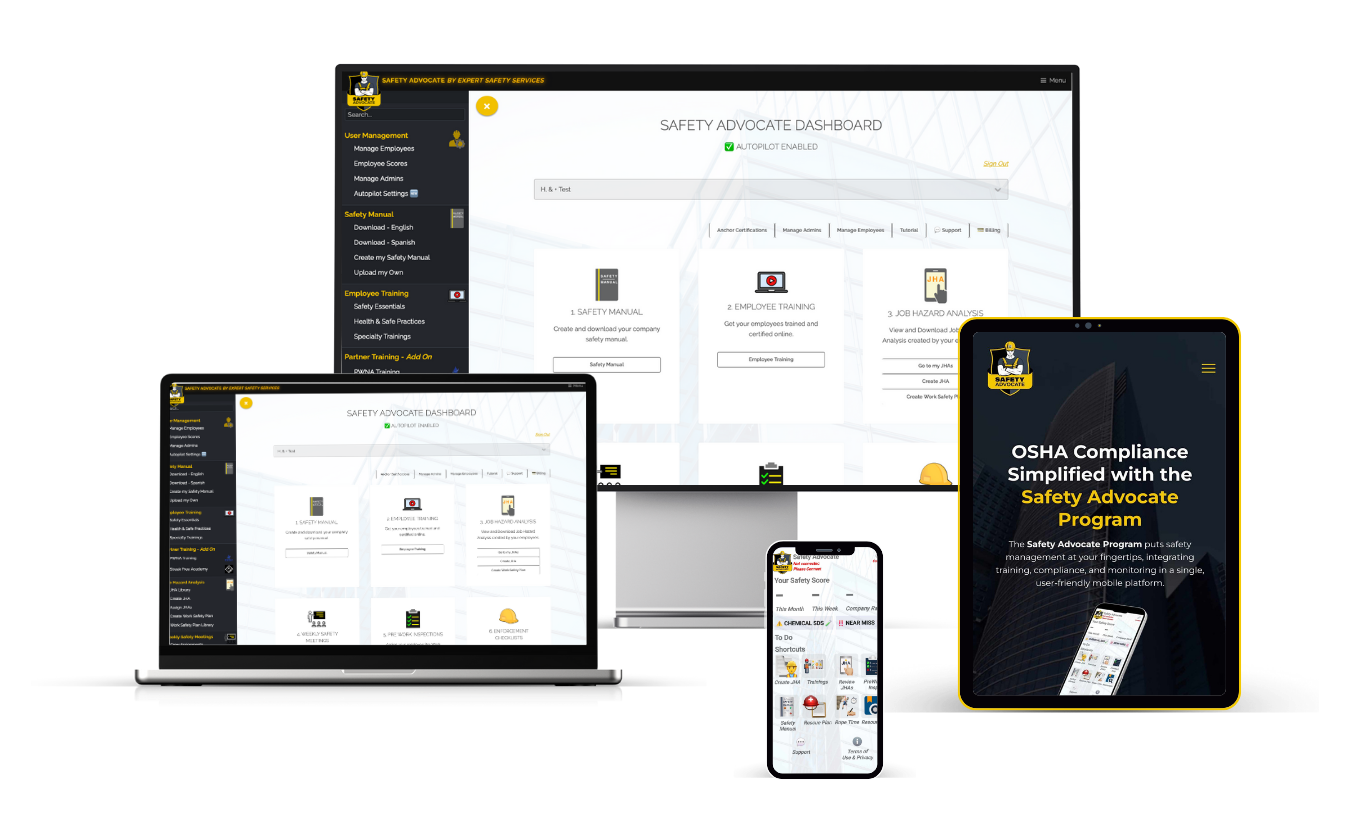
The New Safety Advocate
Raph Hamelain • August 7, 2026
This blog post is for informational purposes only, explaining the Safety Advocate Program. It is not legal advice or compliance guidance.
TL;DR: The New Safety Advocate
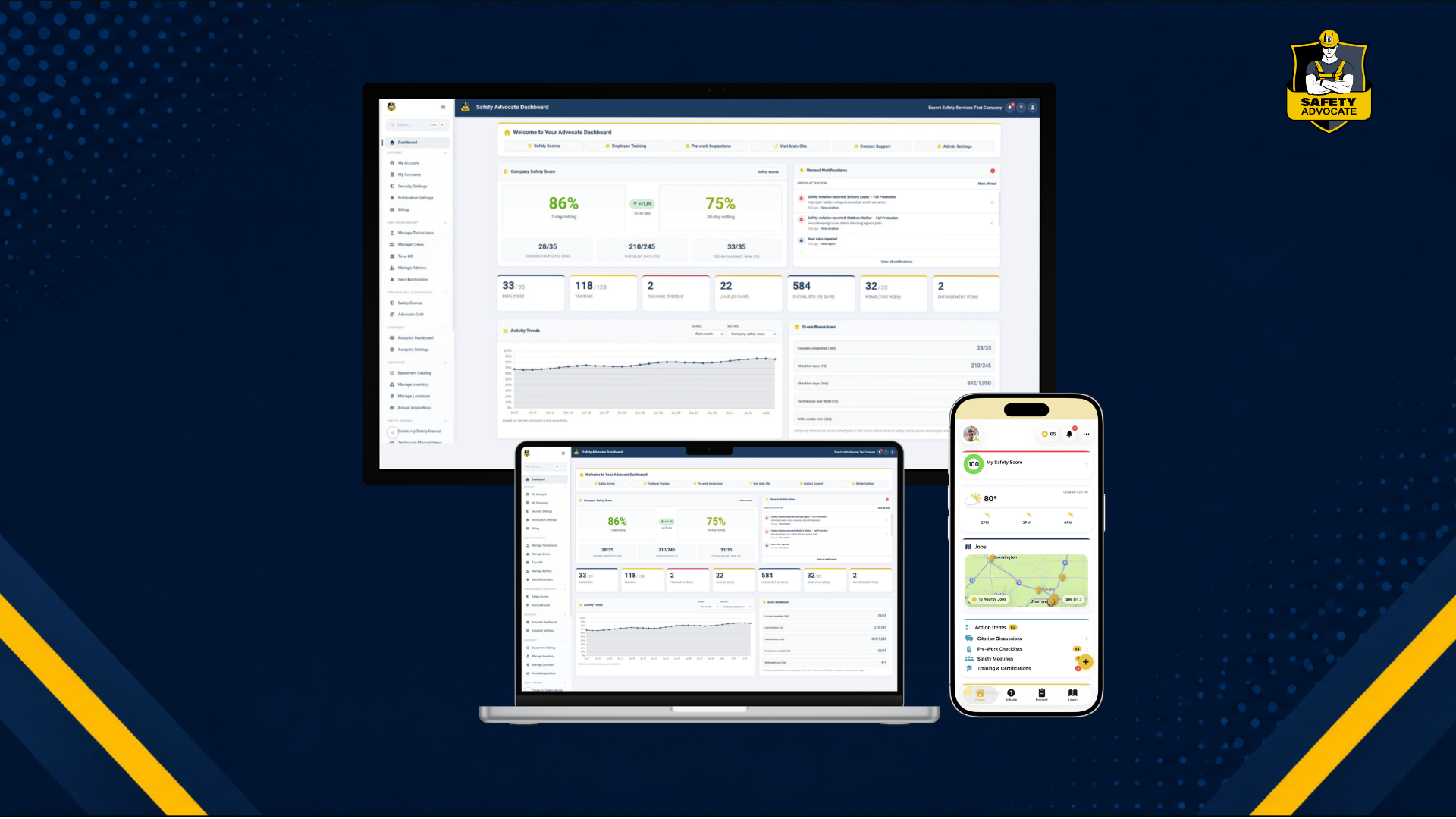
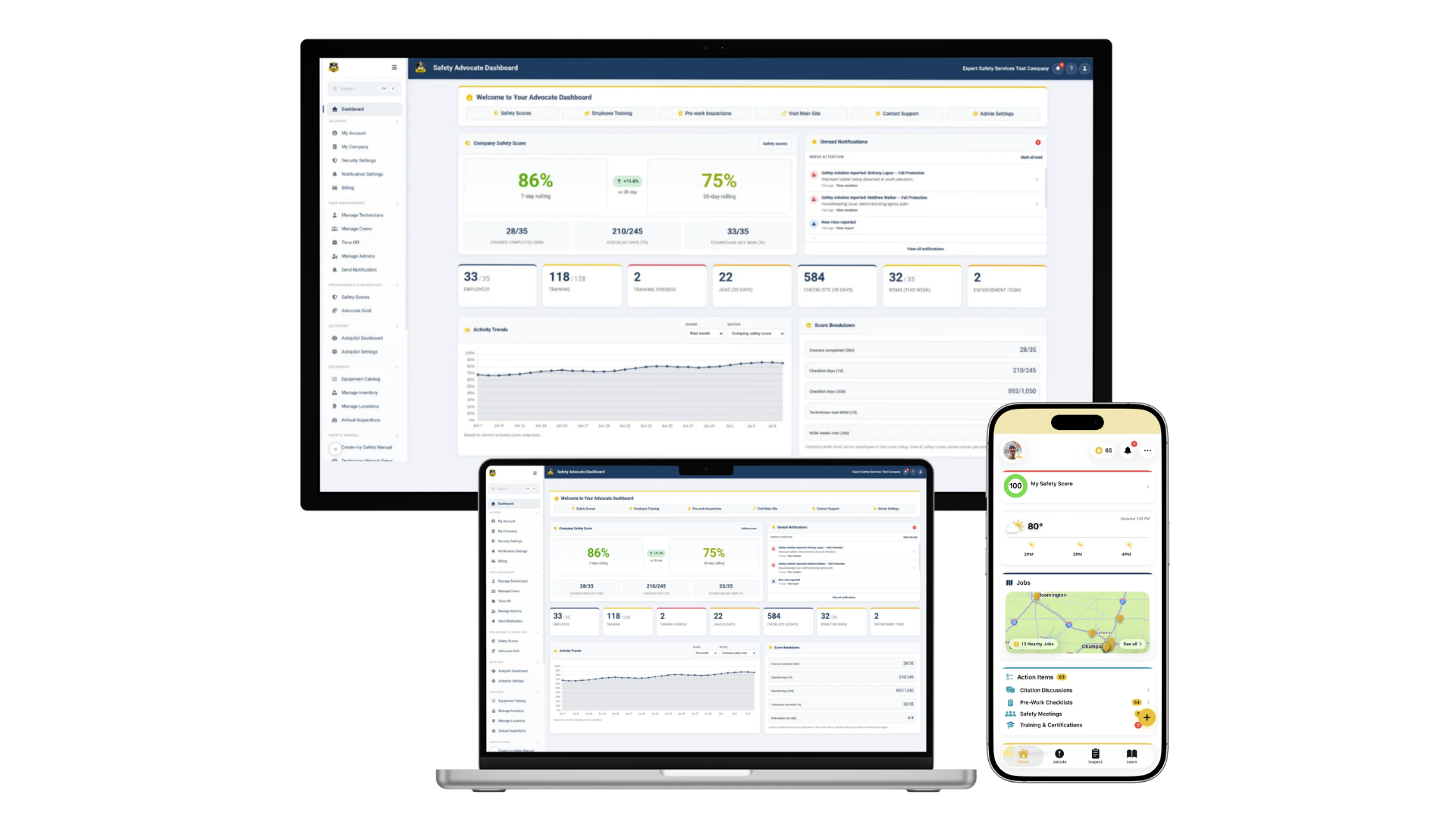
We’ve redesigned the Safety Advocate program to be simpler, faster, and less cluttered. The update makes it easier to manage your safety program with custom checklists, a fully customizable safety manual, a points system that rewards safe behavior, built-in investigation tools for citations and near misses, event report generation, improved performance, and enterprise features for multi-location companies. The goal is clearer daily management and stronger safety habits without the extra complexity. This redesigned experience is coming within the next month.
A Simpler Dashboard. Faster Access. Less Clutter.
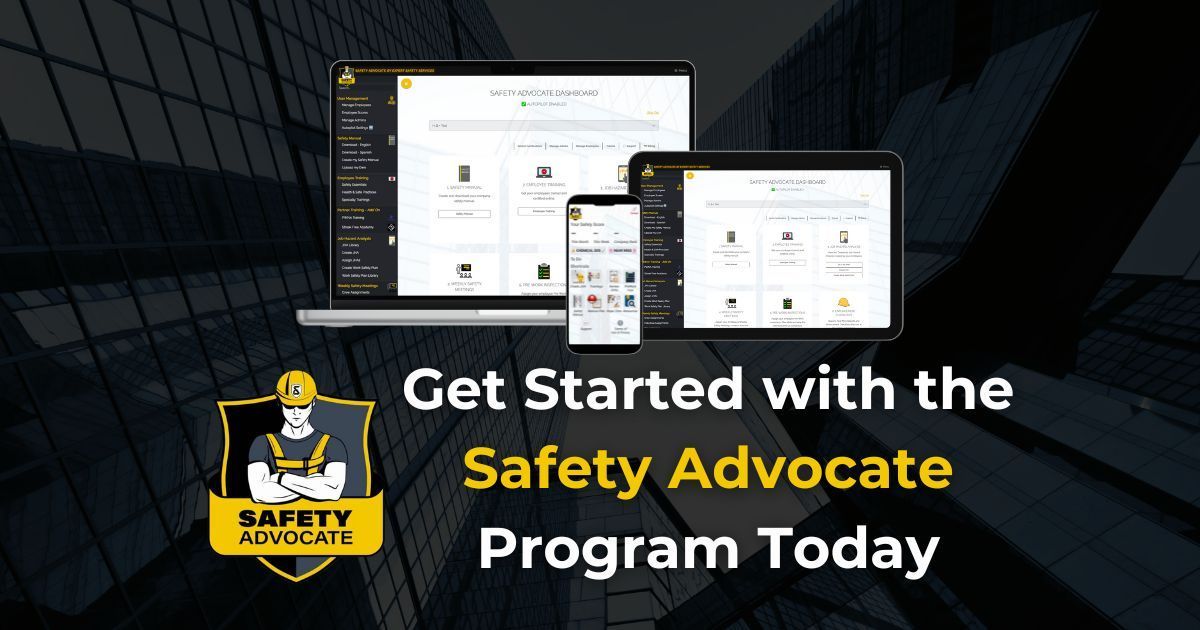
Managing a safety program shouldn’t feel like extra work. That’s why we’ve redesigned the Safety Advocate dashboard from the ground up—focusing on clarity, speed, and the tools teams actually use every day.
The new interface reduces visual noise, puts the most important actions front and center, and makes it easier for supervisors and crew members to stay on top of safety without digging through menus or outdated screens.
Here’s what’s new and how it helps.
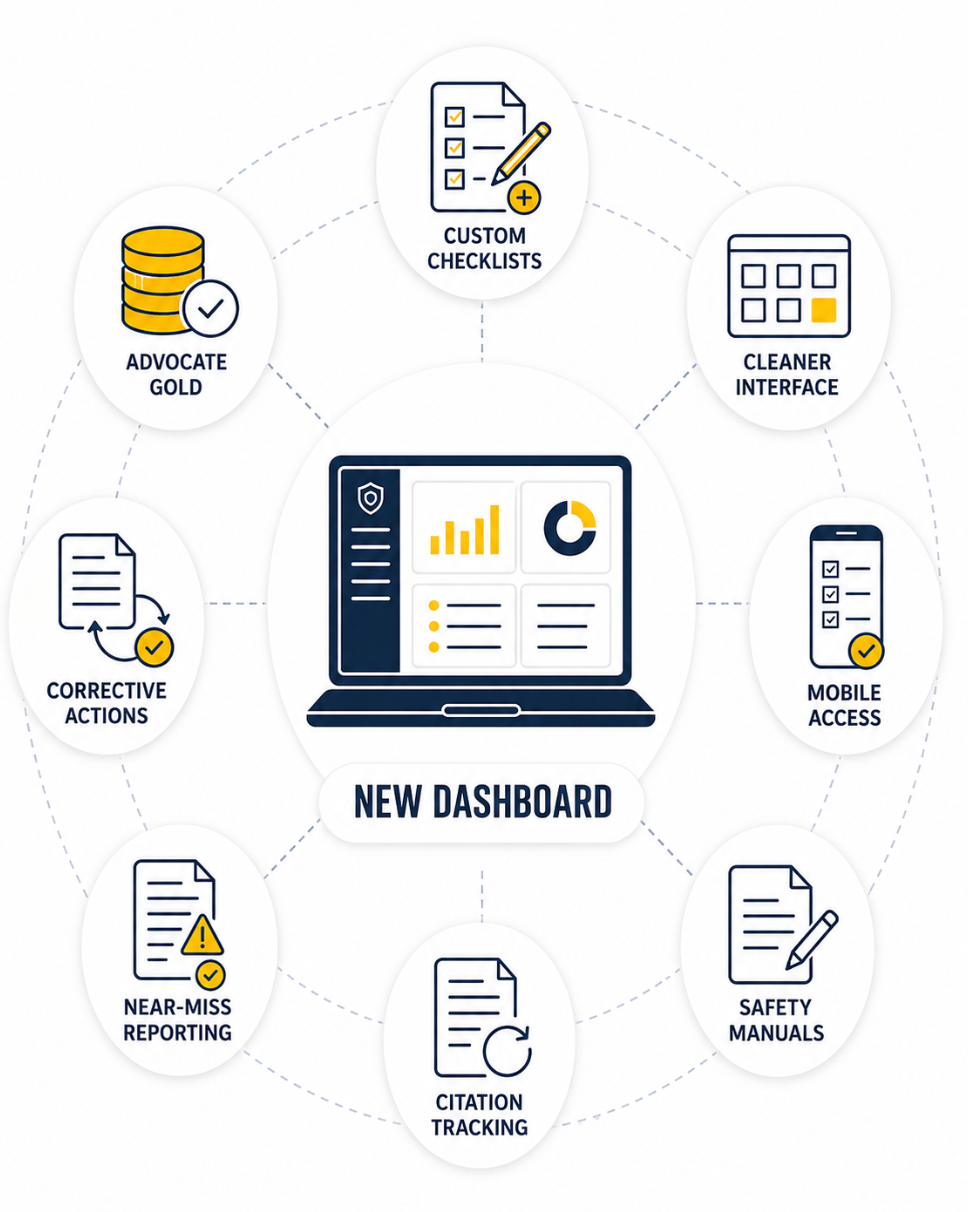
Custom Checklists Built for Your Company
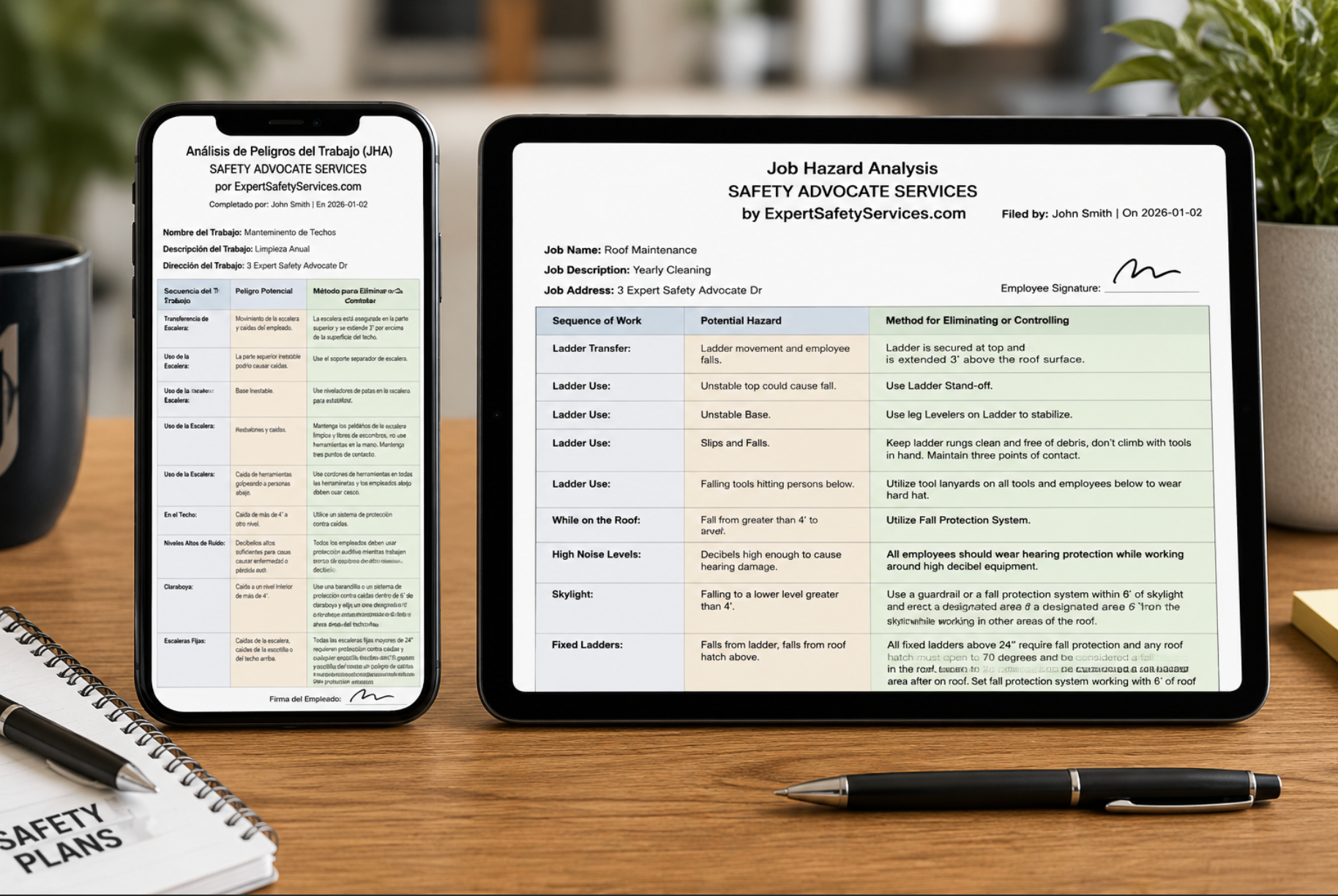
Every company has unique needs. The updated dashboard lets you create fully custom checklists tailored to your work—whether that’s specific PPE inspections, equipment checks, or site-specific procedures.
You’re no longer limited to generic templates. You can build exactly what your team needs and assign them as part of the daily routine.
A Fully Custom Safety Manual
Your safety manual is the foundation of the program. With the redesigned dashboard, you can now fully customize it to match your company’s specific policies, procedures, and guidelines—and update it whenever needed. Employees are prompted to review any changes, and those views are tracked so you always know the team is working from the current version. You can also add other required PDF documents, whether they’re specific to your locale or required by your industry.
A Points System That Encourages Safe Habits
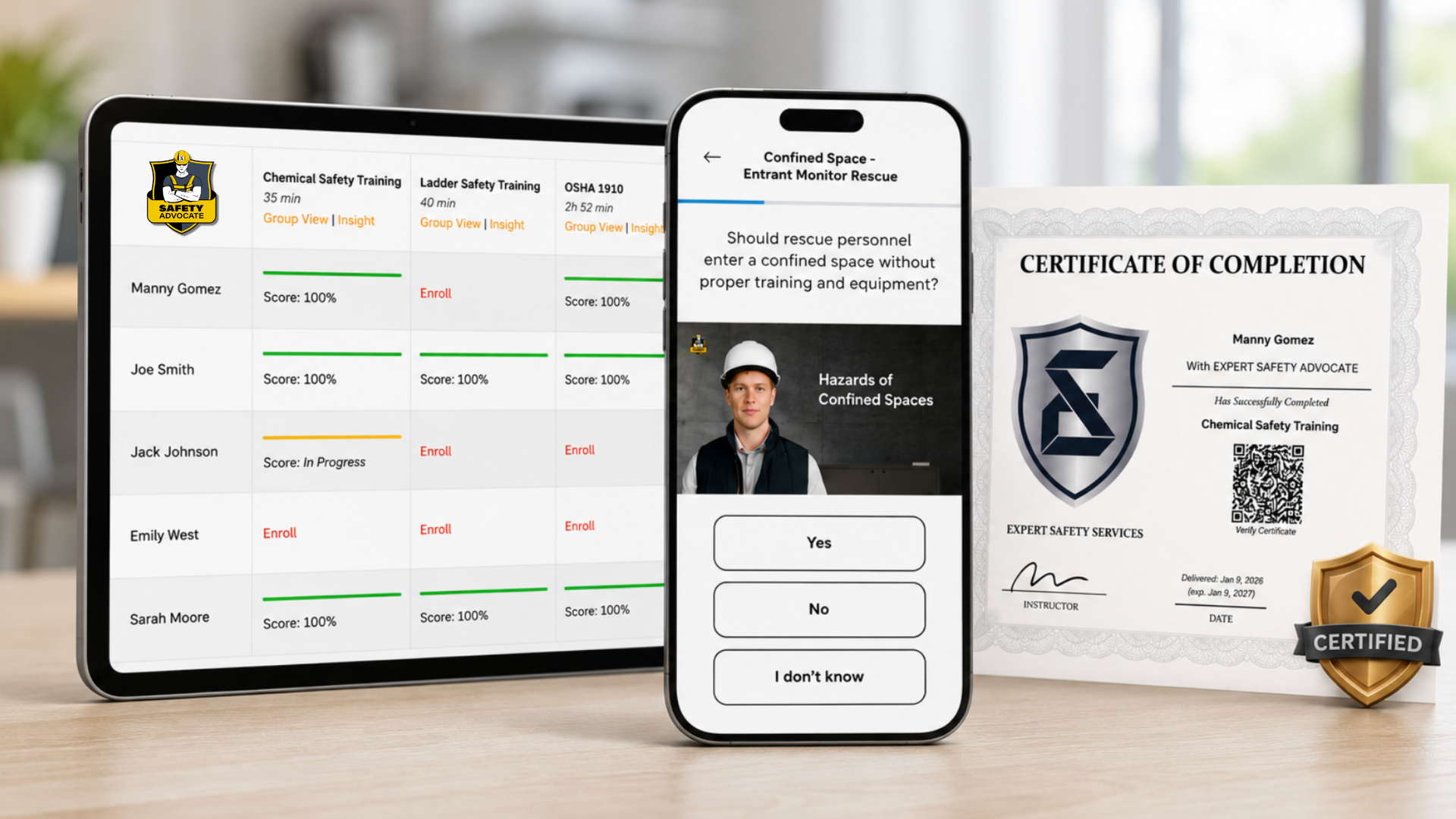
Safety works best when people are motivated to participate. The new points system lets you reward employees for completing inspections, reviewing Job Hazard Communications, attending meetings, and following procedures. Positive recognition helps turn safety from a requirement into a shared habit.
Map Interface for Job Visibility
Employees can now view nearby Job Hazard Analyses (JHAs) on a map. This gives crews better awareness of what’s happening on surrounding jobs and supports clearer communication across sites. While not the main focus of the redesign, the map adds practical context when teams are working in the same area.
Stronger Tools for Citations and Near Misses
When something goes wrong—or almost does— clarity and swift correction matter. Citations and near misses now include a built-in investigation tool and related training resources. Everything stays in one thread: what happened, why it happened, and how the team will address it. It also generates solid documentation that supports compliance and continuous improvement.
Event Report Creation Made Simple
Need to document an incident, near miss, or other safety event? The new report generator walks you through exporting clear, complete records. The process is faster and produces more consistent documentation that supports both internal improvement and external requirements.
Faster and More Stable Performance
Behind the scenes, the platform is more responsive and reliable. Screens load quicker, actions complete with fewer delays, and the overall experience feels smoother—especially important when crews are using the app in the field.
Enterprise Features for Multi-Location Companies
Larger organizations with multiple sites now have stronger tools for centralized oversight while still allowing local flexibility. This makes it easier to maintain consistent standards across locations without forcing every site into the exact same workflow.
A Points System That Encourages Safe Habits
Safety works best when people are motivated to participate. The new points system lets you reward employees for completing inspections, reviewing Job Hazard Communications, attending meetings, and following procedures. Positive recognition helps turn safety from a requirement into a shared habit.
What This Means For Your Team
A well-designed dashboard doesn’t just look better—it helps teams work more consistently and with fewer interruptions. The upcoming redesign focuses on making everyday safety tasks clearer and more manageable, so supervisors and crews can spend less time navigating tools and more time focusing on the work itself. The new experience will be available within the next month, and we’re looking forward to putting these improvements in your hands.
This blog post is for informational purposes only, explaining the Safety Advocate Program. It is not legal advice or compliance guidance.
Contact us today to learn more about the Safety Advocate Program.
Contact Us
Featured Articles
This blog post is for informational purposes only, explaining the Safety Advocate Program. It is not legal advice or compliance guidance.